Saturday, January 16, 2021

I've learned a lot about human nature in the past 5 years.  The attack on our nation on Jan. 6th, 2021 is very disturbing, as are the votes of the GOP to erase valid election results based on provably false accusations.  So far, the USA looks as if it might stay a republic, at least for a little longer.  GOP rep Edwards summed things up fairly clearly as he quit the party, "It’s gone. I mean there is no Republican Party anymore that has values, principles, morals, anything".  To underscore his statement, GOP senator Kinzinger has been called an evil demon and disowned by his family for voting to impeach after it was clear Trump incited rioters and did nothing to stop the violence as it unfolded.

However, the most disturbing behavior I have personally witnessed are from the GOP voters themselves.  The conspiracy mindset and tossing words like "democrat, nazi, christian values" in a ranting manner that show they use those words as weaponized labels stripped of meaning.  A close relative referred to democrats as nazis for stealing the presidency, while I'm literally watching a video of a right wing extremist deface the capitol wearing a shirt with Camp Auschwitz on it.  I watched a man and his son laugh at a woman who would not enter the grocery store because they were blocking the doorway without covid masks and they got in a truck with a christian symbol and trump sticker.  Support for their chosen messiah is fading, yet the unthinking, closed-minded, and cruel attitudes persist with no introspection on what their actions have wrought.

Scientists and philosophers struggle with why humans can be blind to reality.  Watching my country dabble with demagogues has made me realize how delusional I've been in buying into some of our patriotic narratives of the past that bend truth.   I hope we can still learn from our failings, and our recent rabid nationalism serves as a warning to others.  The world has too many real problems to waste precious time and energy on hostile bullshit.


Friday, August 14, 2020

 Time to clean house and donate a few books.  Here's a few quotes to remember from a few of them:

"A man is what he thinks about all day.   Our doubts are traitors and make us lose the good we oft might win by fearing to attempt.  Did we enjoy today?" - Mr. Bean, from notes taped on his locker in SkyLab, Homesteading Space.


"Socrates is evidence enough that classical Greece was something less of a utopia.  Yet there is an interesting contrast between one lone man sipping poison for ideological reasons and an entire city of millions slowly inhaling a lethal mixture as the price of a lifestyle committed to certain technological and material wants that have become needs.  ....  How have we arrived at these goals?  What price are we willing to pay?" - H. Morowitz, "Prison of Socrates",  Mayonnaise and the Origin of Life


"Nature never deceives us; it is always we who deceive ourselves." F. Mowat


Saturday, November 12, 2016

Dark Catharsis

I should be busy with my research right now, but I have not been able to concentrate.  As you might guess, I cannot reconcile why my country has chosen such a symbol of intolerance and greed to be president. 

For perspective, if I overheard a punk talking, even in a locker-room, about my niece using these words, “I moved on her like a bitch… when you’re a star you can do anything, whatever you want, grab em by the pussy”, I would warn them never to come near any of my family.  I’m a poor judge of character, so maybe if he was a smooth talker, he might convince me he was just joking.  Yet if I already knew he bullied kids at school, called girls that fought off his advance fat and ugly, paid kids to do his homework, and an exhaustive record of cheating others, the greasy sales pitch would only solidify my judgement. 

Instead 49.9% of voters want the same creep I wouldn’t let near my niece to be the most powerful
person on the planet.  The most cited reason for his support is the need to “shake things up”, and that this whiny playboy’s bullying tactics are just “clearing the air”.  The idea that a game show host style brashness and a savvy for luxury real-estate qualifies as leadership, while ignoring fundamental character flaws is why the only newspaper in the country to endorse him goes by the moniker “Sin City”.  It is difficult to believe that even deeply conservative newspapers have such a bias that they cannot see the virtue in such a shallow character. 

I do not understand the willingness to disregard those warnings and the moral ambiguity to dismiss the hateful rhetoric as “locker-talk” or “keeping it real”.  I can only question the lapse of judgement that brought us to this moment, and it leaves me with a sense lasting distrust.  Of all the campaigns I’ve experienced, this one reached new lows in the treatment and respect we have for each other.  The wound is raw and I fear it’s infected. 

Aside from the obvious and well-founded concerns most people around the world have about the character of our playboy president-elect, the personal pain for me goes beyond this.  The 100 day fast-track plan has many items that are deeply concerning to me, but #2 on the list affects my own dreams directly - to work for the National Park Service.  The only new federal jobs over the next 4 years will be for the military and attrition will shrink all other departments. 

At my house, I leave the chimney uncapped.  This allows the migrating chimney swifts to raise their family there each spring.  They circle our house each morning and evening and their bright calls can drown out the din of the city.  That such a tiny bird can migrate each year to Argentina and somehow know how to navigate across the ever-increasing sprawl of urban and agriculture is amazing to me.  Unfortunately, they do not earn income or pay taxes, therefore they have no perceived value in Trump’s plan (despite the fact he also does not pay taxes).   Maybe one of the fledglings this year ate a mosquito that could’ve trigged a Zika outbreak near my home and saved many lives.  Maybe it didn’t.  It does not matter to men who value gold-plated toilets in luxury hotels. 

Our wildlife refuges, forests, parks and other natural areas are already being attacked, exploited, and sold.  Agencies needed to protect both our health and the economy will shrink drastically, and science needed to monitor them will be cancelled.  Our own health and security is at risk, as agencies such as the EPA that track lead and mercury in our water supplies will be abolished, and other agencies that interfere with profits, such as the SEC, will be sharply curtailed. 


There are many more grave concerns in just the first 100 day plan, so I will spend the next few months writing about some of them with a constructive perspective.  Yet I feel so sad that nearly half of my country is only concerned about short term gains regardless of long term consequences to our economy, health, and God’s creation that we selfishly exploit.  

If my soul had a vagina, I feel like it was just grabbed it with cold, greasy fingers and half of my country cheered as the light in me faded.

Wednesday, July 8, 2015

Bottom of the 9th


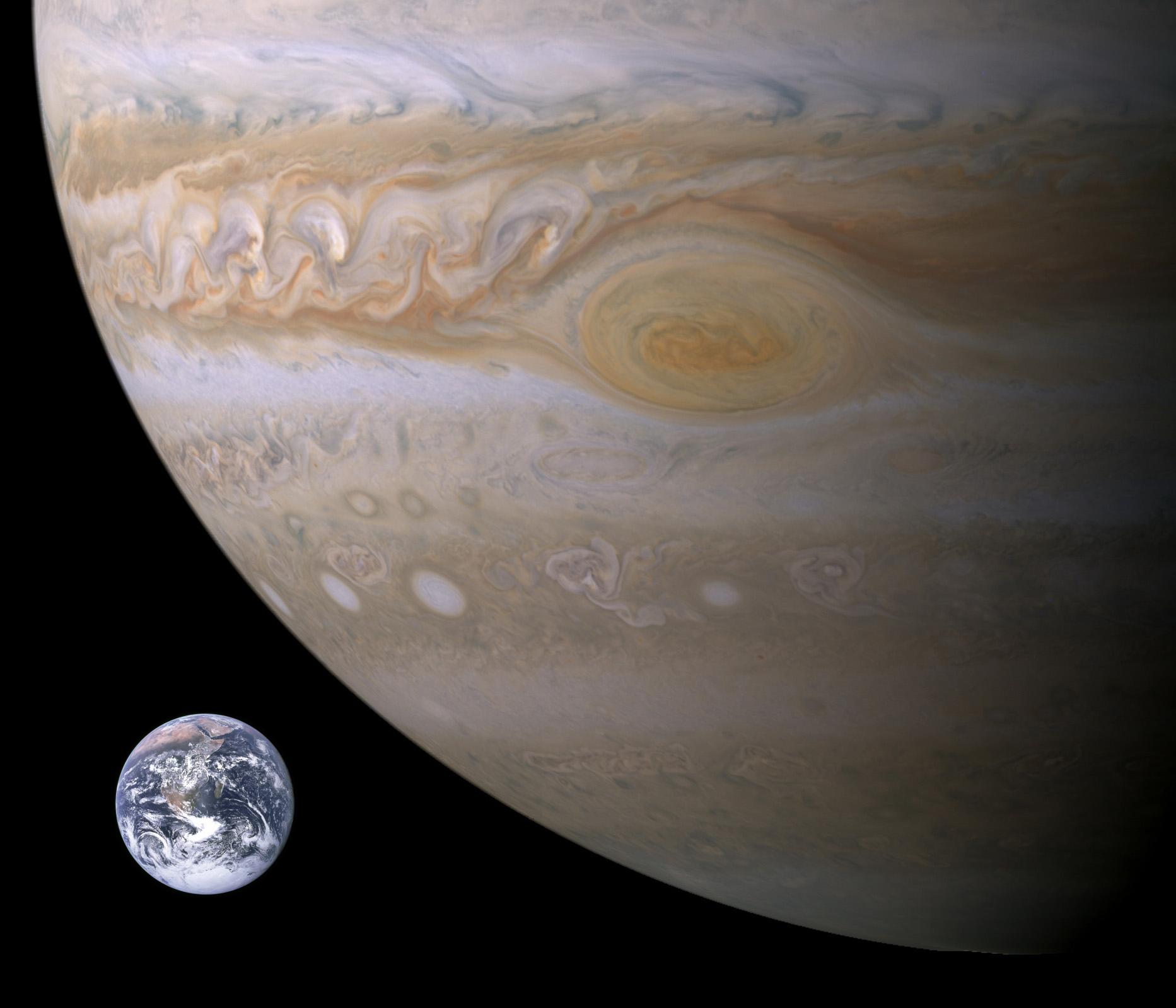
I recall as a kid in elementary school a special presentation in the cafeteria during lunch.  Someone from the Johnson Space Center gave a talk about Voyager passing by Jupiter.  The slide that showed the relative size of earth next to the image from Jupiter was stunning.  The volcanoes on Io were also amazing.  It was huge.

Then Voyager 2 went on to complete the Grand Tour, a voyage of discovery likely never to be repeated in our solar system. Voyager 2 zoomed past Saturn the following year in 1980.  I was in high school by the time Voyager 2 flew past Uranus.  I was in college when she sailed by Neptune.  That was a quarter century ago and those brief encounters are still all we have of 2 of our largest planets.  At that time, the internet as we know it did not yet exist, so it was often months before a decent image could be seen in a magazine and over a year before interesting discoveries discussed.

What was missing in the Grand Tour was a visit to the 9th planet: Pluto.  This is because Pluto has a strange orbit and it was too difficult to change Voyager 2's trajectory to reach it.  Pluto orbits so far away from the sun it takes 248 years to complete 1 orbit.  It was discovered during late spring-time 85 years ago, and now Pluto is just entering fall!


Pluto is known to have an atmosphere, and calculations made it seem possible that during winter the planet would get so far from the sun that the entire atmosphere would freeze onto the surface.  That was one reason why there was a rush to send a spaceship out to photograph the planet while the atmosphere, surface, and amount of sunlight were all optimal.  Missing this window would mean waiting 180 years to try again!  Fortunately, NASA was up to the now-or-practically-never challenge. The Pluto Fast Flyby was proposed in 1992,  but it was 10 years later when a mission was proposed that had the right amount of science for the right cost.  New Horizons was launched in 2006.  Even as the fastest spacecraft ever launched, it still takes a Jupiter assist and 9 years of waiting.,,,

But here we are!  The doorstep of Pluto is already beginning to reveal its secrets and the flyby next week will finally finish what we started.  Pluto may have changed its status from Planet to Dwarf, but in many ways Pluto is in a class of its own.  It is sometimes called King of the Trans-Neptunian Objects, although Eris is larger.  However, Pluto is unique in that it is our only known double-planet system; Charon is so large and close to Pluto, that the two orbit around a barycenter that is outside the radius of Pluto... they orbit empty space.  Even more cool, Charon and Pluto may share an atmosphere, at least part of the time.

There are sure to be many more exciting space missions, some that have the potential to really shake things up (lets get to Europa already!!).  But finally getting to see a map of Pluto is for me the finale of the original foray into our backyard.

Try downloading Eyes on the Solar System and virtually fly along with New Horizons as she speeds past Pluto and beyond.  The preview mode is pretty cool, and its the next best thing to waiting 5 hours for the radio signal to reach home.


Thursday, May 21, 2015

Endangered Species Day


Wow - another year has passed!

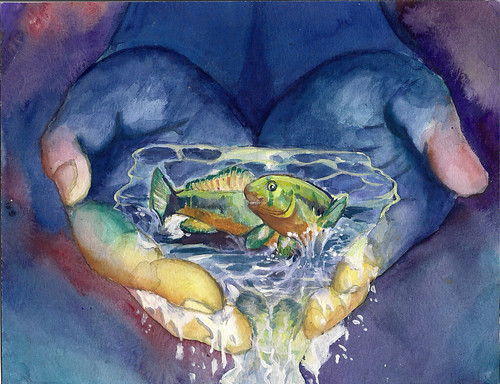
David Starovoytov, 6th, Margaryta Chaplinska Art Studio, CA
Kentucky arrow darter: credit David Starovoytov
I hope everyone celebrated Endangered Species Day by learning and helping the rare living things in our world.

Many species are endangered by one huge problem: habitat loss.  A really unwise and shortsighted resolution passed by the Legislature this spring threatens to sell nearly all our public lands.  There are economic, environmental, ecological, philosophical, and ethical reasons why this is a really bad idea and the article sums the problem up nicely.  Our public lands are already economically important, and even our wildlife refuges do not restrict oil production or other resources extraction.  It's very important to remember that most resource extraction is very short term economic impacts.  Often, there are costs that industry does not portray, such as acid-mine drainage, soil erosion and land slides, water pollution, and many many other problems that are damages that short sighted profiteering does not consider.

These lands are our natural and historical heritage, and any politician that thinks selling them off to the highest bidder is in the best interest of the nation should reconsider their position carefully.  Please consider voicing your opinion to your politician and let them know you consider our battlegrounds, historical trails, forests, rivers, grasslands, oceans, caves and other resources too important to sell off to a foreign company to strip mine or log.  Sign a petition and get involved before this ill conceived idea goes one step further.


The good news is that my thesis research is forging ahead.  I want to understand how "modern" plant communities have changed over time, particularly in response to drought and/or temperature.  This is best accomplished via palynology: the study of microscopic planty things.  Pollen is very tough stuff and fossilizes well, so it is often the best choice for reconstructing what an ancient ecosystem looked like.   The problems with pollen is it doesn't tolerate drying out and its only produced when plants flower.  Some plants reproduce vegetatively and may not produce pollen.
Gus Engeling WMA
Gus Engeling Wildlife Management Area

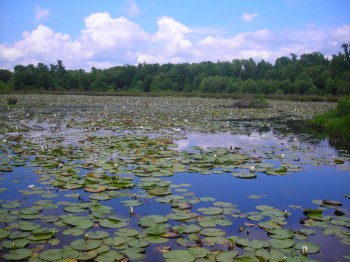
I am conducting my research in North Central Texas.   Texas is a big state, but it has no natural lakes.  There are a few bogs and ephemeral ponds, but these are rare near SMU in Dallas.  The closest bogs to Dallas are at Gus Engeling Wildlife Management Area, and I am coring the pitcher plant bog there to look for pollen.  But when pollen can't be found, there is another trace plants leave behind... phytoliths!

Pytholiths are a bit of a mystery why plants produce them, but there are tiny crystals of opal-silica
Image result for phytolith pictures
Sorghum phytolith 
that form in all parts of the plants.  Exactly what plants use them for is still being debated.

By a stroke of luck, Dr. Reid Ferring serendipitously discovered one of the oldest archaeological sites  in North America during the construction work of  a reservoir spillway along the Elm Fork of the Trinity River.  He discovered many Clovis era artifacts, fossil animals from the pleistocene, and in thin layered sediments from a small pond, pollen.  As the last ice age faded 13,000 years ago, the spring feeding the pond dried up.  Therefore, the pollen record does not continue forward into the Holocene.  He has generously offered his research samples from 25 years ago for me to prospect for phytoliths!  I'll write more about Dr. Ferring's research in my next blog.

Stay tuned as I spend the summer testing different places and layers of time for what plants grew when (and why it's important).


Tuesday, April 22, 2014

Happy Earth Day!

I'm excited to announce I've been admitted to the Masters of Geology program at Southern Methodist University!  I plan to research the resiliency of ecosystems and how past disturbances impact biodiversity, and hope to focus on events from the past ten thousand years.  I'm mulling over ideas for a thesis project, so any suggestions are welcome.   I'll be learning a lot about Earth over the next two years!

Kitty cat from the good ol' days

A really fun exploration event has live camera coverage from the ROV aboard the Okeanos Explorer.  A few days ago, they were exploring shipwrecks 4,000 feet deep.  So deep, they haven't seen light in 200 years, so it was a thrill seeing the live feed from the ROV's camera.  They discovered the ship's sextant and a clock frozen in time, and an engineer for the ROV speculated on the implications.

Life on an eternally dark shipwreck


Also to celebrate Earth Day, Kepler has found a cousin for earth, now called Kepler-186f.  The planet is about the same size as Earth, but the star is smaller and dimmer.

Exciting real-estate opportunities abound!

Tuesday, March 4, 2014

On Seeing More

A few days ago, the Kepler team announced the confirmation of 715 new planets from other solar systems, which is the largest number of planet discoveries ever announced and almost doubled the total in the Exosolar Planetary Catalogue.  This refinement served greatly to understand some census statistics for stars; how common are planets, are they usually in a group, and how massive are they.


The telescope lost its ability to continue its original survey last year, so these planets were "discovered" by munching the existing data set.  However, Kepler will be given a new mission design called K2 since it can still find planets.

However, my title of my blog isn't about Kepler hopefully getting a second life to see more.  Instead, it is one of the more poignant quotes from a wonderful book I just read, Telling Our Way to the Sea. The book is written like field journal entries from an educational trip to the Sea of Cortez, and transitions between story telling and lecturing with such poetic ease that it is very enjoyable and thought provoking to read.

The title I use is from the last sentence of the chapter "Mobula lucasana / The End of Nature", as he reflects upon an amazing underwater encounter with devil rays:  We go in search of wilderness, and so it is wilderness we find.  We tell the story of our rediscovery of nature.  We compose suitable lyrical prose.  We send back photos...  ...These are our dispatches from the wilderness.  But when these photos are held up against images of the past, something is a bit off:  Our fish is rather smaller, or... rather an enormous squid.  That beach is hardly pristine.  In fact, before the oysters were removed, it was not a beach at all.  And that ray, it was 2.5 feet across, not 25.  I too am awestruck by the monstrous squid, lured by the beach, thrilled by the leaping ray.  But how can we reconcile our sincere wonderment with the recognition that what we are seeing is miserably dilapidated? ... What we must do, perhaps, is cultivate our craft of seeing more than one thing at a time.

His first chapter is about Learning to See, and he has a great quote from Thoreau,
"I take infinite pains to know all the phenomena of the spring, for instance, thinking that I have here the entire poem, and then, to my chagrin, I hear that it is but an imperfect copy that I possess and have read, that my ancestors have torn out many of the first leaves and grandest passages, and mutilated it in many places... I wish to know an entire heaven and an entire earth. 
― Henry David ThoreauThe Journal, 1837-1861

Part of what I hope to learn at school this year is to join Thoreau and Hirsch and many others in this quest to gather up these "ragged bits and scraps" that remain and try to glean what pages are lost from this epic, and hopefully paste some of it back together.  We live amid the wreckage, yet we hardly notice that something has changed.
In fact, he has set a litmus for me... for all of us.  Sea turtles have been around for over 100,000,000 years and counting.  The species are incredibly robust and global in distribution, and have survived many major extinction events.  Humans have pushed all species to the brink.  If we cannot save the sea turtles from extinction, it is an indicator that there really is not much we can save. "it is a stupefying but not unrealistic possibility that an entire bough of the tree of life -- on that diverges deep in the tree of life... may reach no higher than the next few decades."

I like the passage where he explains that when you flush a toilet in Denver, you are stressing the few remaining totoaba fishes left in the Sea of Cortez.  Yes, you're right in wondering how in the heck Denver's toilets impact flow on the other side of the continental divide.  That is just a tiny glimpse at our mighty reach and the cascade of impacts we have.  Any know where I can get a bumper sticker that reads "Integrate information on a vast geographic and historical scale; act as an extensive collective to formulate and apply policies on a scale commensurate with the problem."?

There book is full of many deep philosophical and ethical considerations to go along with the story telling.  But one last quote I wish to hold on to: "They were the eyes of a wild animal, wreathed though he was in our creeping domestication.  And now I do take him to be a sign... ...He is another reminder that... ... we are already out there in profound and unavoidable form; and that despite all that, there is something there that is other, something that is not our own reflection."

If I can hold on to that image, maybe I can finally read a book that's been on my shelf for many, many years... The End of Nature.


Tuesday, February 18, 2014

Free Dinosaur Course

Some of the technicians that lead the volunteer preparations of Mosie the Mosasaur informed me about a FREE online, self-paced course from the University of Alberta that is an introduction to dinosaur paleobiology.  The course is titled Dino 101 (https://class.coursera.org/dino101-002), and has a deadline of completion in mid April.  Now I need to add Dinosaur Provincial Park to my world travelling bucket-list.

Canada also made the news with another site already on my bucket-list, a new awesome quarry location for the Burgess Shale.

Ceratopsian dinosaur Chasmosaurus bellis

In other news, I just submitted our Great Backyard Bird Counts.  This year we recorded 17 species in our little backyard of suburban DFW.  The most exciting was watching 120 Cedar Waxwings descend upon our neighbor's red oaks. It's fun to watch the submissions keep coming in real-time.

Next on my to do list is to start recording observations to http://www.inaturalist.org/
That's another fun place to look at observations... like someone just posted river otter tracks near Bastrop, TX. Very exciting!

Friday, January 31, 2014

The Haunted End to the Ice Age

Snowstorm approaches Sunshine Mountain

Did you know that we live in the Ice Ages?  No, I'm not talking about the snowmageddon commute from this winter's polar vortex.  Technically, I mean we live within an interglacial period, some ten thousand years after the last big Ice Sheets melted away.  Don't worry though, despite the lower 48 having a cool winter, it's still warm on a global scale.  In fact, it is likely due to the warming arctic that our winters will have harsher cold fronts.  Most models predict our carbon dioxide and methane contributions have us on course to assuredly end the cycle, with our climate resembling the balmy Eocene by the end of the century. This means we are witnessing the official end of the last Great Ice Age.


So this winter is a fitting time to read up on times gone by. I'm halfway through The Ghosts of
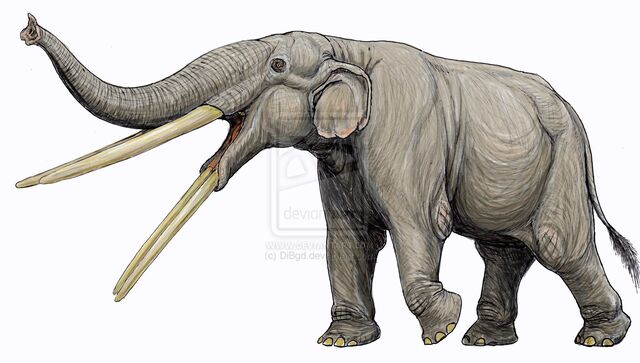
Evolution, and it's a fun look at why certain plants and animals do things that don't make sense.  My favorite example so far has been my beloved Pronghorn Antelopes.  Pronghorns are, by far, the fastest land animal in the Americas and it's easy to wonder why they think they are being chased. Deer and elk certainly don't bother, so what is haunting our antelopes? The answer is they once were chased by a beast that could match their speed, the American Cheetah, which was about the size of a Puma but with the speed of our surviving African Cheetah.

Another example most of us in the Eastern half of USA are familiar with, Maclura pomifera 
Maclura pomifera
(aka the Osage Orange, Hedge Apple, Horse Apple, Bodarc, etc...).  It makes large, softballsized fruits that plop around but rarely eaten by animals other than gnawed on by a rodent.  During the ice age, the tree was growing from sea to shining sea. However, once the last Gomphotheres were driven into extinction, the tree couldn't disperse its seed and has been fading away ever since, aided into oblivion by humans who used their wood to fashion the same bows to perform the coup de grace of the incredible, Serengeti-like wildlife North America once had. The trees still faithfully make their fruit, but their dance partner is a ghost only they can know. Scientifically, these haunted antelopes and trees are referred to as evolutionary anachronisms.


Stegotetrabelodon

As I feel the lonely, cold wind blow standing beneath a haunted Hedge Apple tree, I strain to listen to the Call of Distant Mammoths. I wonder what my walk in the woods would be like if peeking at me over the tree would be a gigantic Megatherium munching on the fruits.  (I also wonder if I'll go to graduate school and study this lost Serengeti, and end up wearing hipster glasses like the narrator of the following video.)

Here's a great PBS video to sum up the book in a nutshell (get it, nutshell?):


Tuesday, December 31, 2013

For auld lang syne

Fast away this old year passes, and as it comes to a close, the last of "The Old Guard" died.  Margi was our last cat from the 20th century, and we had her euthanized yesterday morning since her kidneys had failed and she was starting to have serious trouble moving and eating. She had a good life as cats go, and lived to the grand ol age of 21. She did complain a lot about moving, but always claimed the bed wherever we went. She now joins the rest of the gang of cats she shared most of her life with: Sunshine, Muffin, George, and Pumpkin.


Good bye, Margi.

Thursday, November 7, 2013

Urge For Going

See the geese in chevron flight flapping and racing on before the snow
They've got the urge for going, they've got the wings to go
They get the urge for going
When the meadow grass is turning brown
Summertime is falling down and winter is closing in
I'll ply the fire with kindling and pull the blankets to my chin
And I'll lock the vagrant winter out and bolt my wandering in
-- J. Mitchell


Pipe Shrine Spiral
It's amazing to realize another year at the Four Corners has passed.  It was a strange ending to the season; I only felt half present on the hectic last day of work.  I looked for the ravens that had greeted me many years ago, but they were elsewhere.  So at the end of the day, I went to the south wall of Pipe Shrine House to see the stone spiral, and then hurried on to watch a cold sunset over Point Lookout.

We had a short break before moving, so I took the chance to return to Silver Mountain.  The last of the aspen leaves were falling, and the overgrown path to the old mine near tree line fit my mood.  From there, it was a steep hike up to the ridge where the frosted summit waited.  Strange to think I will likely never stand on this mountain again.

We took our last weekend to do the Great Circle drive around the mountains.  Scotch Creek, where we began our season, was again covered with a dusting of snow and ice forming along the rocks in the stream.  Since the trails were going to be muddy at altitude, we instead went to a small park south of Ridgway along the shores of the Uncompahgre, where a magnificent eagle statue was frozen in mid flight.

Silver Mountain

We then spent a nice anniversary evening at a bed and breakfast in Ouray called the Secret Garden.  The room was so comfortable, we slept in late and missed our morning hike.  We stopped at Jackson Lake to dig snow out of the grill at the picnic area and roast some hot dogs, as a meek attempt to appease my need for a campout on our last weekend.  At least the ravens in the cold mountains took notice of our activity!
Scotch Creek and the Coming Winter

Then it was packing up the house and driving to visit family in Conifer.  The 125th anniversary of the Geological Society of America was being held in downtown Denver, so I had to peek in for a few days to attend talks on paleoecology, evolution, meteorology, planetary geology, and dirt.  I learned of species that have come and gone, climates that have come and gone, and even National Monuments that have come and gone (have you ever heard of Fossil Cycad National Monument)?
GSA 125th Meeting

Again, before I was ready, it was time to hit the road one last time for the final journey back to Texas... where Jury Duty, Dentists, and broken appliances await my return.
Good night, Sleeping Ute.


Monday, October 7, 2013

United We Stand?

Have you ever wondered what it's like to work hard on a job where you're consistently asked to take on more responsibility and accomplish the same amount of work with less resources, only to be told you're "non-essential" and your career and all that it depends on is placed in limbo?  In case you haven't, I've included a graphic photo to show what it does to morale and productivity. 

Non-essential government worker receives furlough notice

Last Tuesday, I listened to the sound of trees dying as printers across the country delivered approximately 1.6 million pages of furlough notices to 800,000 "non-essentials" and begun the cycle of wasting time, money, and resources; both public and private.   As I drove through the entrance of Mesa Verde National Park, watching our Law Enforcement rangers turn back confused campers, I began thinking about the campground, restaurants, lodge, museum stores and the private workers who are now jobless with all the food lost as waste.  It occurred to me that this scene was playing out across the entire country;  experiments ruined, research and work left unfinished as their season ends, projects delayed or canceled, grants frozen, contracts lost... Perhaps the best example I know of and care about is MAVEN, the latest spacecraft ready for launch to visit Mars.  If it misses the launch window this November, the cost of delaying it for 2 years for the next possible window would cost $50-$100 million. 

All this waste is in the name of politics; essentially shredding mounds of cash for no results.  Now threats of a default loom, sure to spark instant inflation and likely the next recession, causing a much larger budget hole than anything being debated... wait, debate sounds like too rational of a process... anything being rabidly thrashed around in the dysfunctional pit of politicians known as Congress.  An article by MarketWatch sums up my opinion perfectly.

Seventh Falls, Silver Creek


Despite this stink of politics tarnishing the season, I have attempted to use the time given to enjoy a few more unexplored corners of the area.  A bushwhack up a mossy mountain creek rewarded me with 7 waterfalls, some with snow and ice from last week's weather.  My goal was Silver Mountain, but too much time wandering the creek and the sun setting early, I decided to turn back rather than get caught in the dark.


The aspens seem to be having a dull show this year at high altitude, but the oaks and willows of the canyons look stunning.  A few juvenile hummingbirds are still around, but soon they will be gone, and so shall we.  Two more weeks and we drive off to Denver to spend a week there, and then back to Dallas.

Bear Creek Canyon

The garden is done for the year, so the last of the meager harvest is just a few peppers, tiny tomatoes, and 2 small pumpkins.  Tonight, I hope to catch a few more bright fireballs of the Draconid meteor shower in the crystal clear night skies we've had the past few days.

Last of the Summer's Harvest

Monday, September 9, 2013

Coyote Camping FTW

So there I was...  following game trails on a hot, august afternoon, trying to find my way across Wildhorse Mesa on tribal land to reach a wildfire.

I was part of a type-2 crew that was organized to fight a few wildfires that cropped up in the Four Corners area.  Most of the full-time wildland firefighters in the area were deployed to big blazes burning in Oregon, Idaho, and California.  Our crew of 9 only had 2 full time wildfires, 3 members of the Mesa Verde natural resources department, 1 archaeologist, and 3 auxiliary members of the Ute Mountain Ute fire department.  Each of us carried a full line-pack with over a gallon of water, and I swapped with another guy carrying a shovel with 3.5 gallons of water on the end and a chainsaw.

We bushwhacked up a canyon and passed the empty windows of several cliff dwellings.  Most of the ancient Puebloan sites here have not been visited in a long time, since the Ute Mountain Utes typically only allow access to some of the more showy and accessible ruins.  We also passed by a wonderful sandstone arch that had a scattering of pottery sherds lying enigmatically on the ground.

Hiking back up to the final mesa to reach the fire really tuckered the crew out, but the wind had settled down and allowed us a chance to battle the 1 acre blaze.  Our closest air support was the Wyoming border, so we were essentially on our own.  We made decent progress putting in a control line around the main fire, and our Law Enforcement lookout posted on the adjacent mesa noticed that there were two spot fires just below the mesa rim.  We split into 2 groups to hit those spots.  The one we worked was on a steep slope that allowed burning logs to roll down, so we dug in a cup trench and lined it with rocks to stop the slop-over.

We were all hot, tired and sweaty as the sun went down.  We had no camp gear, and the canyons were too steep to safely bushwhack 5 hours at night by headlamp -- even if anyone had the energy to do so.  So we camped as the coyotes do, finding a cozy spot in the deep duff of an old Utah Juniper, and went to sleep watching distant lightning flash in far-away Arizona.

One perk of setting up a spike camp with no gear is that its considered a hardship (rightly so), and we actually got paid to "sleep".  I think I managed to doze off a few times, and at least 2 of the Navajo sleeping near me were able to get some sound sleep.  Whatever rest I received was enough, because I was able to shake off the soreness and hike out without too much complaining.  After hiking out and drinking our fill of warm water stashed at the truck, we stopped at the Far View terrace for an ice cream cone.  I recall a story by another Tom from Florida about the psychological importance of ending a tough experience with a pleasant one, as it softens the memory.

So we return to the fire cache and begin rehabbing tools, when the chief walks out and says there's another fire in the park.  We all exchange glances and realized we aren't going to get any more filthy, so off we go to Sun Temple ruins in Mesa Verde to put out another fire.  Fortunately, this fire is just off the roadway.  The storm that created it is fortunately still raining on it, keeping it suppressed.  Unfortunately, it is still tossing lightning bolts everywhere, so after hiding in the truck for a little bit, we decide to return an hour later... with a pump truck.  We hose it down with a solution of foam... so much easier than cutting, digging, and scratching control lines.


But no rest for the weary.  The next day we rode down Moccasin Mesa road to fight a small blaze near a beautiful rimrock pour-off at the head of Pine Canyon.  Our archaeologist was excited by the ruins in the canyon below, and there were plentiful lithic fragments and other artifacts in the nearby woodland.  As the 2nd-string militia works through Saturday chasing fires, we were finally called up to the helibase at Mesa Verde to potentially fly out to a remote fire.  Finally a crew arrives from Kentucky to take over operations, ending an exhausting week of overtime... but no fly time for me.


Work has had some fun moments too; working with the Southern Colorado Plateau Inventory and Monitoring group again, which is always a good time to learn new plants; finding new occurrences of rare plants such as Grindella arizonica and searching for populations  of Iliamna grandiflora that hadn't been surveyed in nearly 30 years; and vouchering a new species to the Mesa Verde herbarium of Sanguisorba minor.

All this hiking on the job has made me lazy on the weekends, and the monsoons don't make it any more tempting to reach the back-country.  Instead, we chose an easy hike to Piedra River Falls and a guided tour of lonely ruins atop Chimney Rock National Monument.  Wildlife has not been lazy, with many bears active in the Park eating chokecherries and acorns.  Elk, deer, hummingbirds... everything seems to be on the move now, getting prepared for autumn.  In a way, we are too, already making preparations for our remaining weeks here.  I'll want to make the most of the beautiful a

spens and hopefully some snow-covered peaks.

We just saw Ken Burns's documentary on America's Best Idea, and I realized there are sooooo many National Parks we've never been to.... and ones we must return to....


Sunday, August 18, 2013

Is There an App For That?

Scotch Creek Sunflowers
“Thousands of tired, nerve-shaken, over-civilized people are beginning to find out going to the mountains is going home; that wilderness is a necessity...” 
― John Muir
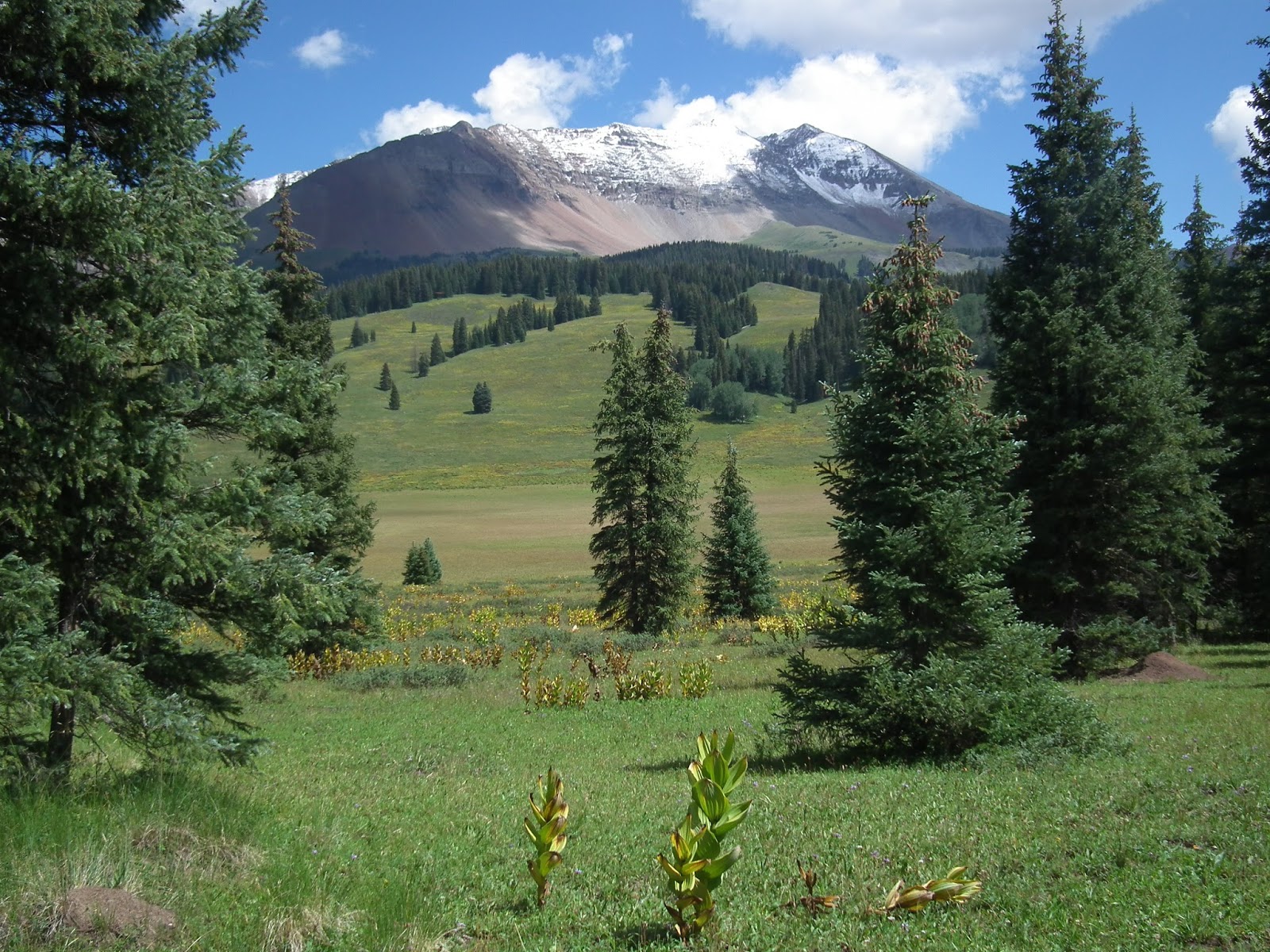
First Snow on El Diente from The Meadows

There has been lots of research and philosophizing on why the Great Outdoors is good for you.  I recently gave a few cheap shots at my relatives for being a little too jacked into the Matrix, and then stumbled across this article on how sunshine resets your internal clock (while doing a little web browsing for potential grad skool - how's that for irony?).  Alas, my own plans at getting my nieces and nephew a taste of the Rockies and the Canyons of the Ancients mostly fell flat, but it was in part to a family reunion of sorts, but also of the technical distractions that I know (and love, and loathe) so well.

Sometimes I would like to have a cheap smart phone, since there are some interesting tools available, such as flora guides, birds, mammals, stars, and rocks.  I watched in envy as my fire crew boss pulled up the latest weather radar along with a map of the latest lightning strikes in the area, information than can be handy.  However, access to real-time data is fairly limited in these blissfully remote places I like to work and visit, so the temptation to enter the 21st century has not forced me to cough up hundreds of dollars for the latest gadget... so far.
BridgeKeeper of Groundhog Trail

The summer is now winding down, with the alpine areas already having their first snow of the season.  Some of the hardier wildflowers like the gentian, castelia, arnica, and penstemon still have blooms, but the show is mostly over.  Some of the service-berry bushes are already turning yellow at Mesa Verde, and the humming birds and night-hawks are beginning their migrations.
The Forgotten Forest Floor

The visit from family was great, since it's rare to get the bro's together in the same place anymore.  My bro scored me a free ticked to the Clockwork Angels tour, which was awesome.  We made quick visits together to see Cascade Falls in Ouray, the ghost towns of Ironton and Howardsville, and Scotch Creek near Rico.  As always, time flew way too fast and we all went back to our respective hobbit holes.

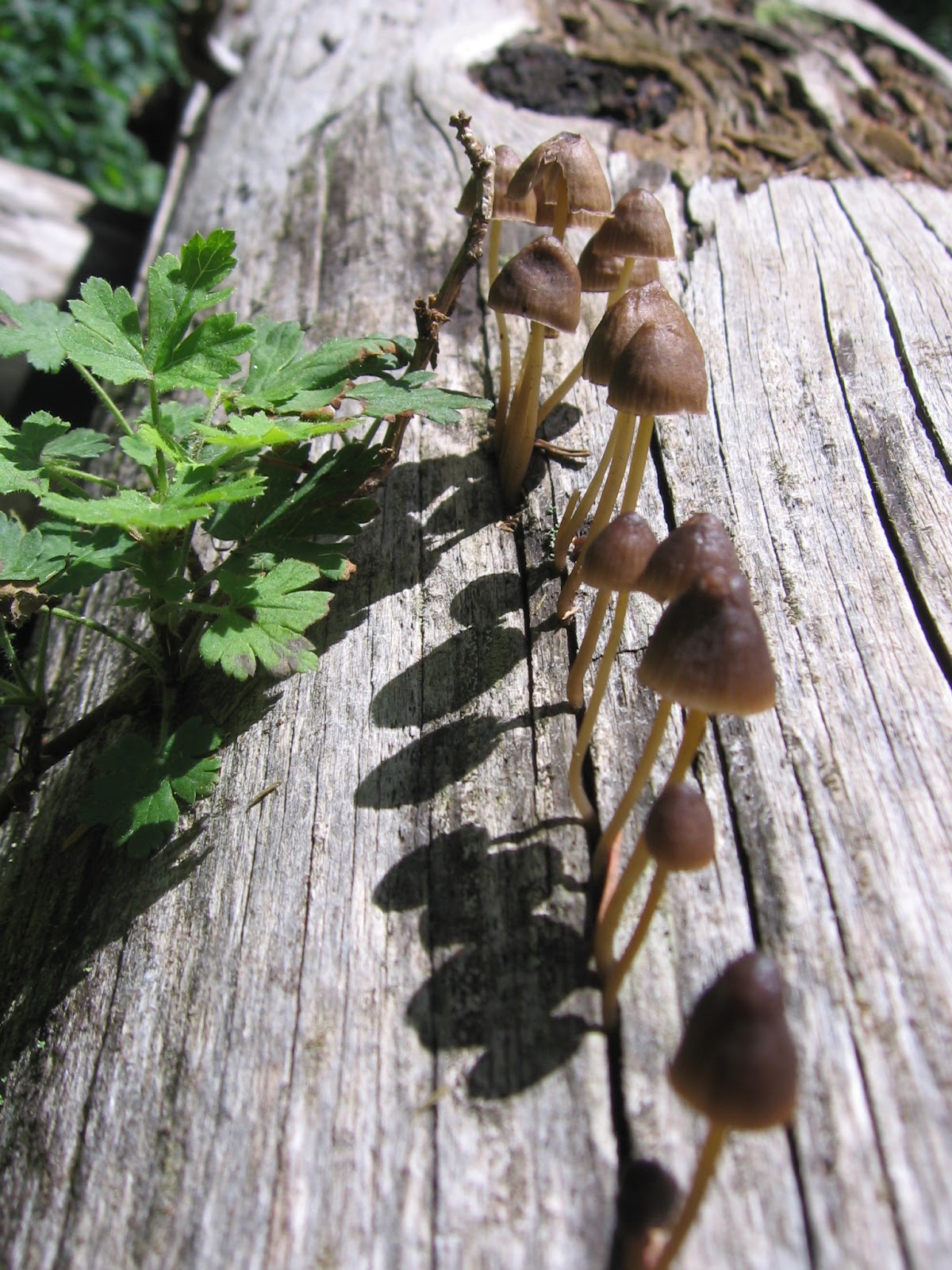
I also managed a quick visit to George and Pumpkin, along with a short hike along the Navajo Lake trail to see the old Dipper Nest.  Just yesterday, I dodged a few storms to ascend Sheep Mountain and watch a juvenile Bald Eagle shake off some haunting ravens on the ridges below me.  The monsoons have been good this year, quenching the West Fork Complex and giving rise to another fascinating fungal bloom in the woodlands.

Soon autumn will return and with it all the changes that come with the season, both to the wilderness and to my own circumstances.


In the rise and the set of the sun 
To the stars goes spinning 
Spinning 'round the night 
Oh it is what it is and forever 
Each moment of memory aflight 
The arrow flies while you dream 
The hours tick away 
The cells tick away
 - G. Lee

Friday, July 26, 2013

Mesa Monsoons

Storms at Hope Lake trail
The summer rains have begun, a little behind schedule but all the sweeter considering the drought and high temperatures.  The rains contained the West Fork Fires near Pagosa Springs, and brought cooler temperatures to Mesa Verde.  Colorado is experiencing a below average fire season to date.  Whew!

At Mesa Verde, we've begun sampling the Long
Long House Ruins
 Term Fire Monitoring plots.  With 100 plots, it takes some time to complete.  The goal of that study is to understand how the pinyon-juniper woodlands at Mesa Verde are recovering from its large fires.  As I've mentioned before, there is a lot of uncertainty about what seral stages the burned area will grow through, how long each stage might require, and what the species-mix is during each stage.  The classic textbook view of woodland post-fire seral-stages is grass yields to shrubs which yields to forest.

Plants are our Friends
However, the real world is never so tidy, and at Mesa Verde these classic stages are muddled by factors such as fire intensity, future fire frequency, human intervention with post fire reseeding of grasses (at unnatural densities and without forbs), unnatural feral horse grazing pressure, and post-fire recolonization with invasive plants.  These factors may create a new path of seral stages for Mesa Verde, so the climax community may end up resembling something different.  Since Mesa Verde has several endemic plants and that aerial reseeding is expensive, studying how fires and related management plans are changing the biotic community is an important goal.
Coppers feast on Arnica

Many of these factors are active areas of study, as we found out first hand at a visit to Rio Mesa Center -- a new research facility for the University of Utah.  We camped out at the new tents and learned about the current research projects, such as inventorying the plants & animals, reclaiming weedy fields to grow native seeds for restoration projects, and peering into the past to understand the past fire regime.  I met several paleoecologists and they encouraged me to learn more and come visit their department in Salt Lake City.  I've been mulling graduate school in either ecology (systems and/or restoration) or paleontology (evolutionary ecology) for a really long time... this year it seems like the fates are coalescing into new potentials to consider.
So as I walk through the mountains here, I wonder what next year will bring.  Any suggestions for my next career?
Cascade Cascades (yeah, the names here are that original)